Setting the stage
Yesterday, I returned to Aikido training for the first time since a rare autoimmune illness robbed me of my muscle strength and caused scarring in my lungs. I eventually had to use supplemental oxygen 24 hours a day, making Aikido training impossible. In February of 2022, I had a double lung transplant 20 days after a failed surgery, which complicated and prolonged my recovery.
It is now August of 2026 as I write this, and while recovery has been long and difficult, I set an intention at the beginning of the month to transition from surviving a lung transplant to living a fulfilling life after lung transplant. One of the first steps of this transition I decided would be returning to regular Aikido training. 1,619 days after my lung transplant, I did just that.
First I Need new Gear
During my initial recovery after my transplant, I had to temporarily live near the hospital for three months, so a caregiver and I were staying in an apartment set aside for patients like me across the street from where I got my transplant. While there, my landlord decided not to renew our month-to-month lease that was in place, leaving me no place to go home to after my stay in the patient housing. I ended up transitioning to a skilled nursing facility, and after that moved in with one of my romantic partners. When the lease was up, all my belongings were moved to a storage space 130 miles away from where I received my transplant. Currently, I share a room in a shared house with no room for an apartment full of belongings, so most of my possessions, including my gear for training in Aikido, are a bit inaccessible. So, replacements had to be acquired.
So before class, I made my way to Young’s Martial Arts in Oakland. There I acquired a new judogi. I told the elderly proprietor that I wore a size 5, but he waved and nodded, assuring me he already knew that just by looking at me. I wanted an unbleached one because it was less expensive, but all of the ones in my size were missing the pants. So I spent a little extra on getting one already bleached. I also asked for a black belt, and I think he upsold me with a premium brand instead of an inexpensive generic belt. Though I must admit it’s a really nice belt. He still has to make a dime, so I am not upset in the slightest. Finally, a hakama. My last hakama was an expensive premium duck cotton job tailored to my measurements, so I had no idea what I wore in “standard sizing”. I had little to worry about as once again the shopkeeper knew just by looking at me.
So I left Young’s Martial Arts with my new gear in hand a bit poorer in the wallet but ready to get back at it.
Enter the Dojo
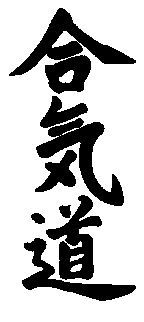
Through providence, the gods, the Force, or just dumb luck, I found Oakland Aikido. A small, young dojo using a shared space. Converting a conference room into a training hall by placing a room’s worth of Zebra mats on the floor, and a small shomen with a picture of O-Sensei and a medium-sized banner with a printout of the word “Aikido” in kanji characters (合気道). There I met the kind instructor, César San Miguel (he/him) who welcomed me warmly into the space.
Oakland Aikido is unique among dojos as it is COVID-conscious. To train there, you must both be vaccinated against COVID-19 and wear a good mask (an N95 or better. This is ideal beyond reason for someone like myself who, because of anti-rejection medication, walks through life immunocompromised. Practically this means that I must mask in most situations and try to avoid crowds. If I train at any other dojo, I will be masked, but finding one where that is a policy makes it an ideal place for anyone with compromised health to train. César assured me that it was for “selfish reasons,” but that is not my story to tell.
So changing into my new gear (I almost remembered how to properly wear a hakama. I will do better next time, but at least it didn’t fall off), I entered the dojo and met my classmates. All of them were friendly, inviting, and enthusiastic about the art of Aikido.
This initial class for me was to serve a few things. First, it was a “vibe check” to see if this was a place where I could continue to train. In this, because of my fellow students and the instructor, I found it to be very compatible. Second was to test what “muscle memory” remained after being so long away from training. In this, it seemed to remain, though my practiced finesse of technique was not quite there in some occasions. I mean, even though I had been out of practice, I have previously put in the “10,000 hours” of practice and then some earlier in life, and I guess that stays with one. There definitely needs to have “some rust knocked off,” but things seem like a good restart.
While my technique was present, my conditioning and stamina certainly were not. Prior to my August setting of an intention, I was in quite the depressive mood swing and spent several months just bedrotting. So I was quite deconditioned, and spent much of the class sitting things out and trying to recover. I pushed myself gently, but years of illness and recovery have made me quite good at listening to my body and acting accordingly. I plan on using the same strategy I used to get my black belt as a new Aikido student in order to regain my conditioning: “don’t quit, and don’t die.”
The class was well run, and we did a variety of techniques, including what was often considered my “signature technique” at my first dojo: shihonage (four-direction throw). Because of my low stamina, I only performed the technique a handful of times, but I was overjoyed to do so. During my Black Belt Presentation in May of 2003, I did a whole section on variations of shihonage while John Coltrane’s rendition of “My Favorite Things” played. That technique is definitely one of my favorite things. When I built a small dojo in a garage, its unofficial name was “Four Directions Dojo,” named after the technique. Any day I get to do shihonage is a good day.
Final Observations

This was not my first long break from training but it was my longest. As I discussed with César after class, that I find that if one’s attitude is correct, if one’s heart is in the right place, then Aikido technique will follow. I have spent the last few weeks since I decided to seek out a dojo getting myself back into an “Aiki mindset”. Just engaging with Aikido in a mental and emotional capacity, I could feel my spirit “lighting up,” and the way I have been moving through the world began to resemble once again when I was training and teaching regularly. (I at this time have no ambition to return to teaching Aikido formally.) It definitely has been an attitudinal adjustment, and a major component in my transition from a survival mindset to a living mindset.
I spent most of Tuesday resting and recovering from the exertion on Monday, but I believe that I am recovered enough as I write this that I will be sufficiently recovered by Wednesday evening to train again. So the next phase of Aikido training is not to quit and not to die. So I will return.
どうもありがとうございます。 (Dōmo arigatōgozaimasu. “Thank you very much.”)
Leave a Reply